If you have hired a commercial painting contractor in Michigan before, you already know the sinking feeling when a project goes sideways. The paint starts peeling six months in, the team you were promised never shows up, or the final invoice looks nothing like the original quote.
These are not rare horror stories. Many property owners and facility managers have dealt with poor paint jobs, missed schedules, or coatings that fail long before expected. Knowing the most common contractor problems before you sign anything can save your facility, your budget, and your sanity.
Key Takeaways:
The Estimate Looks Great Until the Final Invoice Arrives
One of the most frustrating problems facility managers and general contractors run into is the surprise invoice. A contractor comes in, gives a low number, wins the job, and then finds reasons to add costs as the work progresses. Change orders pile up, materials cost more than expected, and suddenly the final invoice looks nothing like what was agreed to.
When contractors uncover unexpected conditions mid-project, budgets and timelines shift, and facility managers are left explaining change orders and delays to upper management. That is a position nobody wants to be in.
A legitimate commercial painting contractor should give you an all-inclusive estimate that breaks out labor and materials separately. That transparency tells you two things: the contractor knows what they are doing, and they are not planning to hide markups. At Paramount Painting Services, the quote you receive is the price you pay, and if the team miscalculates how much paint or primer your facility needs, that is on them to absorb, not you.
Your detailed estimate should include the amounts and prices for labor and materials, along with the payment terms. If a contractor cannot give you that up front before the job starts, that is your first warning sign.
You Hired One Company and a Different Team Showed Up
This is one of the most widespread problems in the commercial sector. You hire a reputable-looking company, but on Monday morning a completely different team shows up. Many firms operate like middlemen: they win the job, then hand it off to subcontractors.
Most painting contractors rely on a rotating cast of subcontractors, which creates inconsistency, quality variability, and accountability gaps. When something goes wrong, responsibility gets murky.
Subcontractors are often paid by the job, not the hour, which can encourage speed over quality. If something fails three months later, the business you hired can point the finger at someone else.
This is not a knock on every subcontractor. The problem is that when a company operates as a pass-through, the person you sat down with during the estimate may have no control over what happens on your job site. Ask any contractor directly: are your painters employees or subcontractors? The answer tells you a lot about how accountable they are.
At Paramount Painting Services, every project is handled by our own trained team. Edgar Mateus runs the company locally, and either he or a project manager checks in throughout the job, so you know who is showing up and who answers the phone if there is an issue.
No Communication Once the Job Starts
Silence from a contractor mid-project is one of those problems that feels small at first and then becomes a serious headache. You have a facility to run, and you need to know what was completed yesterday and what the plan is for tomorrow.
Your contractor should be responsive and easy to reach for questions and updates. Poor communication leads to misunderstandings, delays, and dissatisfaction with the finished project.
A professional team explains the process, asks about your goals, and is easy to reach when needed. If they cannot communicate before the first coat goes up, it will not get better once the job begins.
At Paramount, clear daily communication is a standard part of how projects run, not something that only happens when there is a problem. The process includes a project kickoff with you or your team, regular check-ins throughout, and a final walkthrough with a punch list to confirm everything meets your standards before the job is considered complete.
Surface Prep Gets Skipped and the Paint Fails Early
Poor surface prep is behind a huge share of early paint failure in commercial buildings, and it often does not show up until months after the team has left. Surface preparation is not optional in commercial environments. High-traffic corridors, loading docks, stairwells, and restrooms take constant abrasion and humidity, and skipping proper prep can shorten the lifespan of a new paint job dramatically.
Defects can come from any stage of a poorly managed project, from rushed prep to hasty application or the wrong type of commercial paint. Problems like blistering and peeling often stem from trapped moisture, incompatible paints, or improper curing.
When you are hiring a commercial painter in Michigan, ask specifically how they prep surfaces before any coating goes on. A contractor who skips or rushes that step is setting your facility up for a repaint much sooner than planned, which is money you should not have to spend twice. For a closer look at how skipped prep creates bigger problems, see our breakdown of cheap paint job problems that cost more later.
Paramount uses only high-quality products and follows current industry standards for surface preparation on every commercial project. We do not cut corners, because that approach always catches up with both the contractor and the client.
OSHA Compliance Isn’t Optional and It Affects You Too
This one surprises a lot of facility owners and property managers. If a contractor is injured on your property and is not insured or OSHA-compliant, you could be held liable. That risk has nothing to do with the quality of the paint and everything to do with who you chose to hire.
OSHA sets strict safety protocols for painting contractors, including respiratory protection for painters exposed to fumes, dust, or lead, and fall protection for elevated work. According to OSHA, fall protection is required in construction at heights of six feet or more, and compliance applies to projects of all sizes, not just large-scale commercial work.
When vetting any contractor, ask to see proof of current licensing, insurance, and OSHA training. A contractor who hesitates on that request is telling you something important. Paramount Painting Services is fully licensed, insured, and OSHA compliant, and the team stays current with the latest safety practices on every job, from an interior office repaint in Novi to an exterior commercial project in Royal Oak.
No Warranty or Guarantee After the Job Is Done
A problem that gets overlooked during hiring is the lack of any post-project accountability. Some contractors are easy to reach before the job and nearly impossible to find after you have paid. If paint starts failing, peeling, or bubbling a year later, you are left chasing someone who has moved on to the next client.
Ambiguous quotes, product vagueness, prep shortcuts, missing credentials, or silence on warranties all signal trouble ahead. A warranty conversation should happen before you sign, not after. If a contractor cannot tell you what they guarantee and for how long, that should give you pause.
Paramount backs every project with a 3-year craftsman warranty and a lifetime product warranty. That coverage means something because we also use only high-quality products from the start, since cheap paint on a commercial surface is a short-term budget decision that becomes a long-term maintenance cost.
How to Avoid These Problems Before They Start
Most of these problems are avoidable if you ask the right questions before the work begins. Here is a simple checklist for facility owners, general contractors, and property managers:
The facility professionals who avoid these problems are the ones who ask hard questions up front.
What a Good Commercial Painting Contractor Looks Like
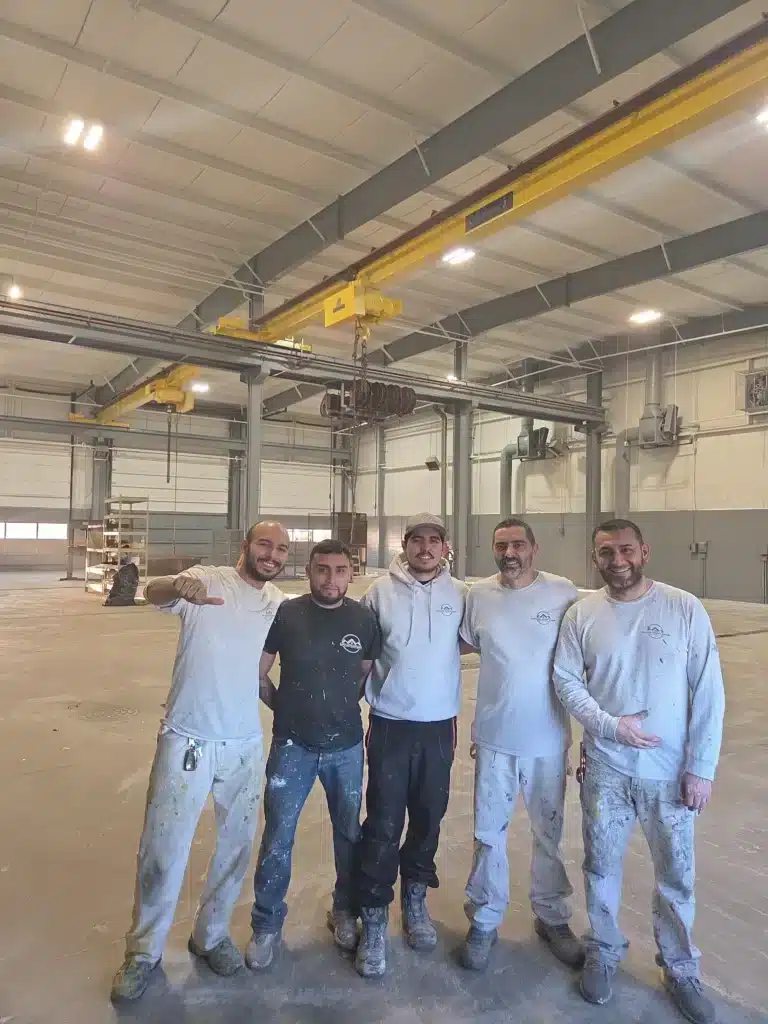
When a contractor operates with integrity, your experience as a facility owner or general contractor should feel straightforward. You get a clear estimate with no hidden numbers. The team that shows up is the team you were told about. Someone communicates with you throughout, and the work is done to spec, on time, and cleaned up completely when they leave.
That is not an unrealistic standard. It is the baseline for how commercial painting should work every time. It is also why so many property managers in Plymouth, Northville, Canton, Novi, Royal Oak, and communities across Oakland, Wayne, and Washtenaw counties work with Paramount Painting Services on repeat projects.
With over 100 completed projects, 100 combined years of team experience, and a process that includes a formal final walkthrough and punch list on every job, the goal is simple: you should not have to stress about any part of this. For related reading on how product choices affect long-term results, our exterior paint selection guide walks through surface-by-surface considerations that apply to commercial properties as much as residential ones.
If your facility needs a commercial painting contractor that operates without the problems described above, Paramount Painting Services is ready to show you what a well-run project looks like from the first call to the final walkthrough. Our estimates are all-inclusive, our teams are our own, and the price you are quoted is the price you pay. When you are ready, contact Paramount Painting Services at 734-251-2073.