Every exterior project in Metro Detroit starts with the same question: should you use oil-based or latex paint? The short answer is that latex has won the debate for most exterior surfaces, but the full answer depends on what you are painting.
The oil vs latex exterior paint choice is not about which product is better overall. It is about which product handles Michigan’s freeze-thaw cycles, siding material, and long-term weather exposure on the specific surface in front of you.
This guide walks through the real differences between the two, where each still earns its place, and how Paramount Painting Services LLC decides between them on every exterior project.
Key Takeaways
What Oil vs Latex Exterior Paint Actually Means
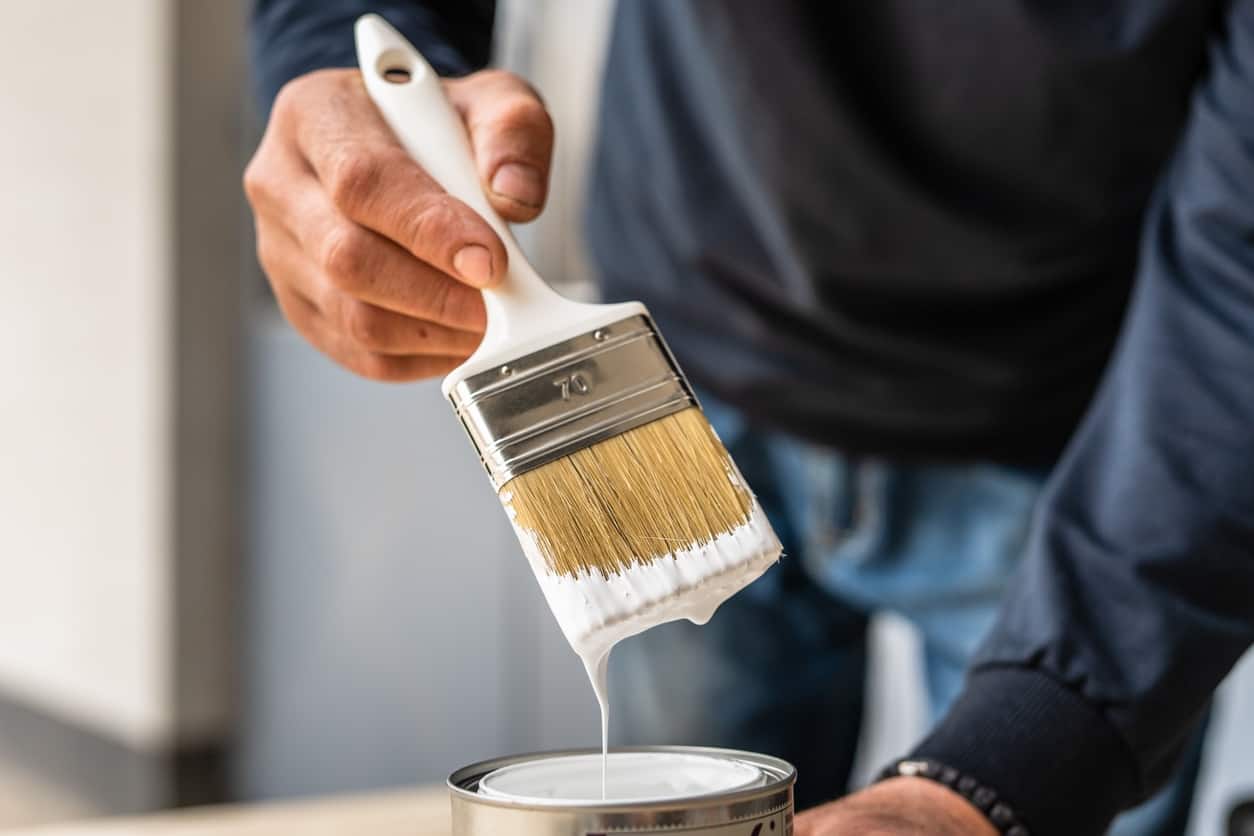
The two paint types are built on completely different chemistry. Latex paint uses water as the carrier, with acrylic or vinyl resins suspended in it. Oil-based paint uses petroleum solvents like mineral spirits to carry alkyd or natural oil binders.
That single chemistry difference drives everything else:
- Latex paint stays flexible after it cures, dries in 1 to 2 hours, and cleans up with soap and water
- Oil-based paint cures into a hard, glossy shell, takes 6 to 24 hours between coats, and requires mineral spirits for cleanup
Neither is universally better. Each solves different problems on different surfaces.
The real question is not which one to pick for every surface of your home. It is which one fits each specific surface best, based on what Michigan weather does to exterior paint over a 10-year cycle.
Why Michigan Climate Changes the Answer
Michigan exteriors go through about 60 freeze-thaw cycles every year. Siding expands during summer humidity and contracts during winter cold. Any paint on that siding has to move with it.
Latex paint flexes. Oil-based paint does not.
That single engineering difference explains most of what goes wrong with oil-based exterior paint in Michigan:
- The hard shell cannot stretch when siding expands
- Small cracks appear within 3 to 5 years
- Moisture seeps into the cracks
- Freezing temperatures force the cracks wider
- Peeling, blistering, and full paint failure follow
Experienced Plymouth house painters see this pattern on homes where a previous owner chose oil-based for exterior siding. If you want pros who understand how Michigan winters destroy the wrong paint choice, a qualified team of Plymouth house painters can walk your exterior and recommend the right product for each surface.
The VOC and Regulatory Picture
VOCs (volatile organic compounds) are what you smell when paint dries. They also form ground-level ozone, which is why federal and state regulators have tightened limits on them for decades.
The numbers matter:
- Latex paint: under 50 grams per liter of VOCs
- Oil-based paint: 300 to 400 grams per liter
That is a 6x to 8x difference. The EPA’s architectural coatings rule sets federal limits for paint VOC content under the Clean Air Act.
Michigan applies stricter limits than the federal baseline. The state follows Lake Michigan Air Directors Consortium (LADCO) VOC standards, which reflect tighter regional air-quality requirements. This makes oil-based paint harder to source and restricts certain formulations in Michigan compared to southern states.
For most homeowners, this means two things: oil-based paint options are narrower than they used to be, and modern latex products are what paint manufacturers are investing their research dollars into.
Where Latex Paint Wins on Your Exterior
Latex paint is the right answer for about 85% of the exterior surfaces on your home. Its flexibility, UV resistance, and mildew performance make it the default product for siding and most exterior projects.
Latex paint wins on:
- Wood siding, fiber cement, stucco, and vinyl. All four materials expand and contract, and latex moves with them.
- Soffits and fascia. These surfaces face constant humidity variation, and latex resists mildew growth.
- Brick and masonry. Latex breathes, which lets trapped moisture escape instead of pushing paint off the wall.
- Large exterior surfaces generally. Latex allows two-coat application in one day, which matters for Michigan’s short exterior painting season (April through November).
Premium acrylic latex products like Benjamin Moore Aura Exterior and Sherwin-Williams Emerald Exterior now last 10 to 12 years on properly prepped siding in Michigan. Mid-tier latex products like SuperPaint and Duration Exterior deliver 7 to 10 years.
The cheap paint problems that show up in 2 to 3 years are almost never a latex-versus-oil issue. They are a quality-versus-budget issue within whichever type you picked.
Where Oil-Based Paint Still Earns Its Place
Oil-based paint has not disappeared from professional painters’ trucks. It still outperforms latex on specific surfaces where its properties are uniquely useful.
Oil-based paint still wins on:
- Metal railings, wrought iron, and steel. Oil-based forms a tighter moisture barrier that prevents rust better than standard latex.
- Previously oil-coated surfaces. If a surface was painted with oil-based 15 years ago and is still holding, recoating with oil-based (or latex with a proper bonding primer) avoids adhesion failures.
- Ultra-smooth trim and doors. Oil-based’s slow dry time lets brush strokes level out for a glass-like finish.
- Stain-blocking over tannin-heavy woods. Cedar, redwood, and knotty pine release tannins that bleed through latex; oil-based seals them.
Oil-based paint is also the stronger choice for cabinet-level durability on exterior applications. Similar logic applies to interior cabinet projects, where cabinet painting cost reflects the specialty coatings (including oil-based and waterborne alkyd options) that make cabinet finishes last.
For most exterior siding, oil-based is not the answer. For specific metal, trim, and compatibility situations, it still is.
The Modern Compromise: Waterborne Alkyd Paints
Waterborne alkyd paints are the bridge between oil-based performance and latex cleanup. They deliver oil-based’s smooth finish and durability, while giving you latex’s lower VOCs and water cleanup.
How waterborne alkyds compare:
| Feature | Oil-Based | Latex | Waterborne Alkyd |
|---|---|---|---|
| Smooth finish | Excellent | Good | Excellent |
| Dry time | 6 to 24 hours | 1 to 2 hours | 4 to 6 hours |
| Cleanup | Mineral spirits | Soap and water | Soap and water |
| VOC level | 300 to 400 g/L | Under 50 g/L | Under 50 g/L |
| Flexibility | Poor | Excellent | Good |
For upscale Metro Detroit homes in Birmingham, Bloomfield Hills, and Royal Oak, waterborne alkyds on exterior trim and doors are often the best of both worlds. Benjamin Moore Advance and Sherwin-Williams ProClassic Waterborne are the two most-used products in this category.
This is why the choice is no longer strictly oil versus latex. The modern answer includes a third option that did not exist 15 years ago.
How to Decide What Goes on Each Surface
A clear surface-by-surface decision matrix makes the choice simple. Every exterior project uses more than one paint type, and the right match depends on what you are coating.
Use this framework for Michigan exteriors:
- Wood or fiber cement siding: 100% acrylic latex (Aura Exterior, Emerald Exterior)
- Stucco and masonry: 100% acrylic latex with masonry primer where needed
- Vinyl siding: 100% acrylic latex rated for vinyl (heat-reflective formulas matter)
- Trim, doors, and shutters: Waterborne alkyd or oil-based for premium finish
- Metal railings and wrought iron: Oil-based or rust-inhibitive latex with metal primer
- Garage doors (steel): Waterborne alkyd or latex with proper adhesion primer
- Previously oil-coated surfaces: Match with oil-based, or latex with bonding primer
The matching matters more than the brand. A premium product on the wrong surface still fails. A correct match gives you the full 10-year-plus lifespan you paid for.
Common Mistakes That Waste Paint Money
Most early exterior paint failures trace back to three mistakes. None of them are really a latex-versus-oil issue.
The top three are:
- Applying latex over old oil-based without a bonding primer. The two will not adhere properly. Test the existing paint with rubbing alcohol on a rag; if it comes off, it is latex; if it does not, it is oil-based.
- Painting outside the right temperature window. Michigan’s exterior painting window runs from April through November. Cold, wet, or freezing conditions cause paint to cure improperly, no matter which type you use.
- Cutting costs on a quality primer. Skipping primer or using a cheap one undoes the benefit of premium paint. Both latex and oil-based paints need the right prep underneath.
Get those three right, and the oil-versus-latex decision becomes much less stressful.
Ready to Choose the Right Exterior Paint for Your Michigan Home?
The best oil vs latex exterior paint answer for your home depends on your siding material, trim details, and current paint condition. Professional exterior house painting matches the right paint type to each surface, handles the prep correctly, and delivers a finish that holds up through Michigan’s full freeze-thaw cycle.
Call us at 734-251-2073 for a FREE estimate today.